Magua and Munro’s feud
The Last of the MohicansMagua and Munro’s feud turns a punishment imposed under a military rule into a long-lived demand for revenge, then makes Munro’s daughters instruments of that conflict. Magua presents his grievance as a response to humiliation and dispossession; the story also places it within the unstable alliances and land pressures of the war between the French and English.
The injury behind the feud
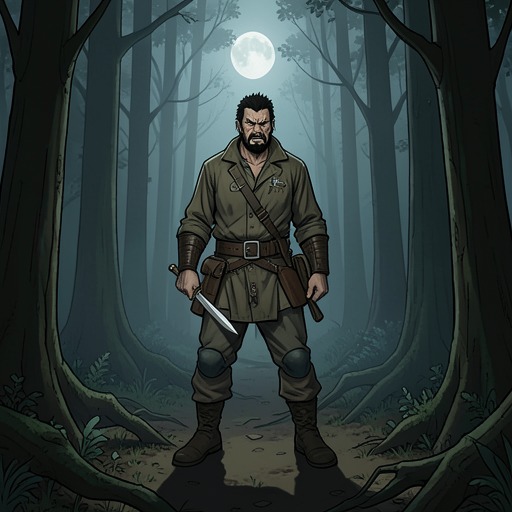
Magua tells Cora that when English and French forces began fighting, he joined the Mohawks against his own people. He says Munro, the old commander at Horican, had directed the Mohawk war party and established a rule against an Indigenous warrior who had drunk fire-water entering the soldiers’ quarters. Magua admits that he broke the rule, but argues that the drink acted in his place. Munro nevertheless had him tied up and punished before the soldiers. Cora defends her father’s action as justice; Magua rejects that judgment, distinguishing the punishment of a deliberate act from punishment for conduct he attributes to intoxication.
Magua contrasts that public humiliation with the scars he says he received in battle. A warrior, in his account, can display wounds from knives and bullets as signs of courage, whereas Munro’s punishment left a mark he feels compelled to conceal. He recalls enduring an earlier ordeal without complaint, but insists that the memory of Munro’s punishment has not faded. In his formulation, a Huron’s spirit remembers forever: the feud is sustained not simply by pain, but by the shame attached to how it was inflicted.
Revenge through Munro’s family
When Cora asks what he wants, Magua states a rule of reciprocal return: good for good, bad for bad. He refuses to confront Munro directly, arguing that the English have long weapons and sharp knives, and instead claims that he holds the old commander’s spirit in his hand. His threat makes the family relationship itself a weapon: Munro is physically beyond Magua’s reach, but his daughters can carry the consequences of the feud back to him.
Cora offers to take the danger upon herself and asks Magua to release Alice. He rejects the prospect of compensation and proposes that Cora be made to serve him as a wife, laboring in his household. He imagines Munro’s body remaining among his cannon while his heart is exposed to Magua’s vengeance. Cora condemns this as treachery and defies him, but Magua’s expression makes clear that her protest has not changed his purpose. After he leaves, she conceals the full import of their exchange from Alice, though her anxious attention to the captors betrays her alarm.
A private grievance in a shifting war
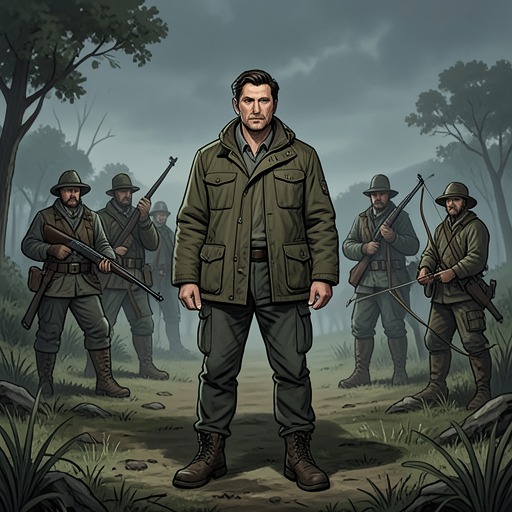
The feud operates inside a political landscape in which military loyalties do not follow a single, stable division. Magua tells Montcalm that he took up the hatchet for blood, while Montcalm insists that the English have surrendered and are no longer enemies. He asks Magua to demonstrate his standing by guiding the Hurons in their conduct toward their new allies. Magua, however, measures the alliance against his own grievance and makes clear that French friendship cannot erase what he believes Munro did to him.
Hawkeye’s account of the conflict among Indigenous nations further complicates the feud’s setting. He describes Hurons and Oneidas fighting each other despite speaking closely related languages, Delawares divided among themselves, and long-standing enmities disrupted by white political maneuvering. The narrator likewise notes that the Delawares withheld support from Montcalm, reportedly out of regard for an old obligation to the Six Nations, while their villages and hunting grounds lay within French territory. The military alliances around Magua and Munro are therefore tactical and pressured, not a simple expression of shared identity.
Consequences and narrative significance
Magua’s personal grievance also supplies a public argument for violence. In a speech to his people, he recalls their dead, their families’ losses, and the absence of revenge, then presents retaliation as a way to erase disgrace from the Huron name. The appeal helps turn anger into collective action: the warriors rush toward their prisoners, and Magua redirects them toward prolonging the captives’ suffering. His private feud thus becomes entangled with a communal language of injury and vengeance.
The story also presents the conflict against the broader loss of Indigenous hunting grounds to white settlement and war. Magua’s account identifies displacement and the growing power of white commanders as part of the world in which the feud takes shape, without making those conditions identical to his personal dispute with Munro. The tension between private injury, military discipline, and political alliance gives the feud its larger significance: a rule intended to govern conduct becomes, in Magua’s telling, the origin of a grievance that reaches beyond the commander who imposed it.